






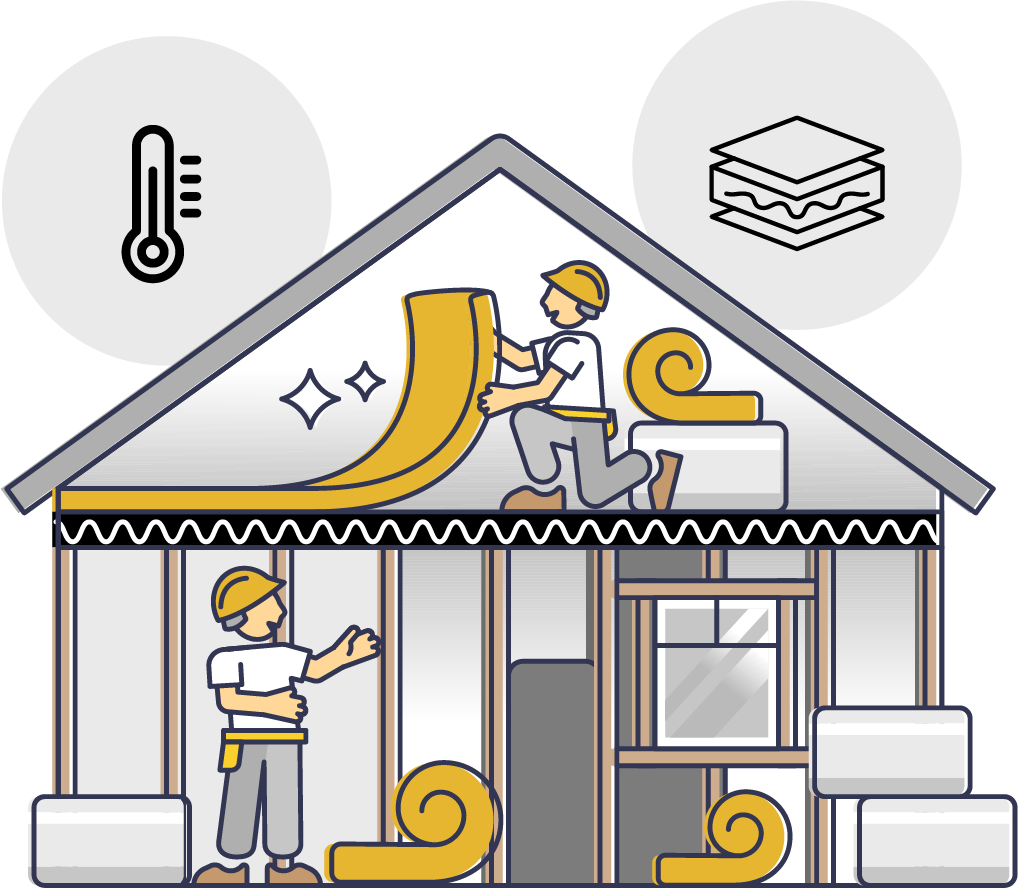
Spray foam insulation is now one of the more popular choices for homeowners in Ontario seeking improved energy efficiency, stronger air sealing, and long-term comfort.
Unlike traditional insulation materials like fibreglass or cellulose, spray foam expands on application, filling gaps, cracks, and hard-to-reach spaces that often allow heat loss.

This ability to create a tight air barrier is what makes it so effective, but also more complex. When you start requesting quotes, you need to understand that you are not just paying for the insulation material. You are also paying for expertise, equipment, labour, and time.
In Ontario, where winters are long and cold, and energy costs can fluctuate significantly, spray foam insulation is often seen as an investment rather than a simple home upgrade. But because every property is different, pricing can vary widely from one contractor to another.
Spray foam insulation isn’t a one-size-fits-all product—so understanding how it works is the first step to understanding why quotes can differ so much.
If you are considering spray foam insulation or want to get actual prices to compare, please fill out the short online form to receive FREE QUOTES.
What to Check in Spray Foam Quotes?
When you receive a spray foam insulation quote, it should be more than just a price—it should clearly outline what work will be done, what materials will be used, and what conditions are assumed. Understanding what’s included helps you compare quotes properly and avoid surprise costs later.

1. Type of Spray Foam (Open-Cell vs Closed-Cell)
A proper quote will specify whether the contractor is using open-cell or closed-cell spray foam. This matters because each type has different costs, performance levels, and use cases.
Closed-cell foam is more expensive but offers higher insulation value and moisture resistance. Open-cell is more affordable and commonly used for interior applications.
If the type isn’t specified, you can’t accurately compare quotes.
2. Coverage Area and Thickness (R-Value Target)
Quotes should clearly state:
- The area to be insulated (square feet)
- The thickness of the application
- The target R-value
Two quotes with the same square footage can differ significantly if one includes thicker insulation.
3. Surface Preparation
Before spray foam is applied, surfaces often need to be prepared. This may include:
- Removing old insulation
- Cleaning dust, debris, or grease
- Drying out moisture-prone areas
- Sealing gaps or cracks
Prep work can significantly impact both cost and quality of the final result.
4. Labour and Installation
Labour accounts for a major portion of the cost. Contractors consider this when providing an estimate for your insulation project:
- Set up of spraying equipment
- Application of foam
- Monitoring for proper expansion and coverage
Experienced installers may charge more, but they often deliver better consistency and fewer issues.
Proper installation is critical; poor workmanship can reduce insulation performance. Keep this in mind when comparing insulation contractors and their quotes to choose the right one.
5. Equipment and Safety Measures
Spray foam installation requires specialized equipment and safety precautions. A professional quote may include:
- Ventilation setup
- Protective barriers or coverings
- Safety gear and compliance measures
Safety and proper handling affect both the quality of the job and your health.
6. Cleanup and Disposal
After installation, contractors may include:
- Trimming excess foam
- Removing debris
- Disposing of old insulation materials
Not all quotes include cleanup, so it’s important to confirm with the contractor. Cleanup costs can be high if not included in the quote.
7. Access and Site Conditions
Some quotes account for site-specific challenges, such as:
- Tight crawl spaces
- High ceilings or hard-to-reach areas
- Limited access points
These factors can increase labour time and cost. Difficult access often explains higher quotes—not necessarily higher pricing.
8. Warranty and Guarantees
Reputable contractors usually include:
- Workmanship warranty
- Material performance warranty
This ensures that if something goes wrong, you won’t be at risk. A lower quote without a warranty may cost more in the long run.
9. Additional or Potential Costs
Some quotes will note possible extra charges, such as:
- Unexpected moisture issues
- Structural repairs needed before installation
- Additional insulation thickness if required
Transparent contractors will mention these charges upfront, even if the fees are not guaranteed. This helps you budget realistically and avoid surprises.
A good spray foam quote should feel clear, detailed, and transparent. It should explain not just how much you’re paying, but exactly what you’re getting.
If a quote seems vague or too simple, it’s worth asking questions. The more clarity you have upfront, the more confident you can be in your decision, and the better your insulation results will be in the long run.
Long-Term Value of Spray Foam Insulation
While spray foam insulation has a higher upfront cost than traditional materials, it often delivers long-term savings through improved energy efficiency.
In Ontario’s climate, reducing air leakage can make a noticeable difference in heating bills during winter and cooling costs in summer. It also improves indoor comfort by reducing drafts and temperature fluctuations

Over time, these benefits can help offset part of the installation cost, especially in older or poorly insulated homes.
Spray foam insulation is less about the upfront cost and more about long-term comfort and energy savings.
Benefits of Spray Foam Insulation vs. Other Insulation Types
Choosing the right insulation isn’t just about cost—it’s about how your home performs over time. Spray foam insulation stands out because it doesn’t just slow heat transfer like traditional materials; it also seals air leaks, which is a major source of energy loss in most homes.
To really understand its value, it helps to compare spray foam directly with common alternatives like fibreglass and cellulose.

1. Superior Air Sealing Performance
One of the biggest advantages of spray foam is its ability to expand and fill gaps, cracks, and hard-to-reach areas. Traditional insulation materials like fibreglass batts or blown-in cellulose can leave small air pockets that allow heat to escape.
Spray foam creates a continuous barrier that significantly reduces drafts and uncontrolled airflow.
This is important because air leaks can account for a large portion of heat loss, especially in older homes. Sealing them improves both comfort and efficiency.
While other insulation slows heat transfer, spray foam actively stops air movement.
2. Higher Energy Efficiency
Because it combines insulation with air sealing, spray foam often delivers better overall energy performance. Homes insulated with spray foam typically maintain more stable indoor temperatures year-round.
Fibreglass and cellulose can perform well when installed properly, but they don’t prevent air infiltration as effectively as spray foam does.
Better energy efficiency from spray foam insulation can lead to lower heating and cooling costs over time.
Further, spray foam helps your HVAC system run more efficiently, which can translate into long-term savings.
3. Higher R-Value Per Inch (Especially Closed-Cell)
R-value measures the efficiency of insulation and its resistance to heat flow. Closed-cell spray foam offers one of the highest R-values per inch among popular insulation types.
This means you can achieve strong insulation performance even in tight spaces where thickness is limited.
Fibreglass typically has a lower R-value per inch, which means you need more material to achieve the same level of performance.
In areas like walls or basements, space is often limited—a higher R-value per inch is a big advantage. Spray foam delivers more insulation power in less space.
4. Moisture Resistance and Mould Protection
Closed-cell spray foam acts as a moisture barrier, helping prevent water infiltration and condensation. This is important in basements, crawl spaces, and exterior walls.
Fibreglass and cellulose can absorb moisture, which may reduce their effectiveness and create conditions for mould growth if not properly managed.
Moisture issues can lead to costly structural damage and health issues.
Spray foam not only insulates; it also helps protect your home from moisture-related problems.
5. Improved Structural Strength
Closed-cell spray foam adds rigidity to walls, ceilings, and roofs once it cures. While it’s not a structural material on its own, it can enhance the overall strength of certain building components.
Traditional insulation materials do not offer this benefit.
In some cases, this added strength can improve durability, especially in areas exposed to wind or shifting conditions.
In short, spray foam contributes to both insulation and structural support.
6. Long-Term Durability
Spray foam insulation does not sag, settle, or compress over time if properly installed. Fibreglass batts can shift or sag, and blown-in cellulose may settle, reducing effectiveness.
This means spray foam tends to maintain its performance for decades without needing replacement or adjustment.
Consistent performance reduces maintenance and long-term costs. With spray foam, you can forget about insulation problems for a long time, unlike materials that degrade over time.
7. Improved Indoor Comfort
Homes insulated with spray foam often feel more comfortable because temperatures stay more consistent and drafts are minimized. It can also help reduce outside noise, particularly with open-cell foam.
Fibreglass and cellulose provide some sound dampening but don’t offer the same level of air sealing, which contributes to comfort.
Comfort isn’t just about temperature—it’s also about eliminating cold spots and drafts. Spray foam creates a quieter and more stable indoor environment.
8. Space Efficiency
Because of its higher R-value per inch and its ability to expand, spray foam is ideal for tight or irregular spaces. It can be applied in areas where traditional insulation would be difficult to install effectively.
Fibreglass batts require standard framing sizes, and gaps or irregularities can reduce performance.
Every inch of space is important in walls, attics, and crawl spaces. Spray foam adapts to your home rather than forcing it to fit the insulation.
9. Fewer Installation Gaps and Errors
Spray foam is a liquid that, when applied, expands to fill cavities, reducing the risk of gaps or missed areas. Traditional insulation requires careful cutting and fitting, which increases the risk of human error.
Even small gaps in fibreglass insulation can reduce overall performance.
Installation quality has a big impact on insulation effectiveness. Spray foam reduces the margin for error during installation.
Spray foam insulation offers a range of advantages over traditional materials, particularly in terms of air sealing, energy efficiency, and long-term performance. While the upfront cost is higher, many homeowners find the benefits outweigh the initial investment—especially in extreme climates.
If you’re looking for maximum performance and long-term value, spray foam insulation is often one of the most effective options available.
Typical Cost Ranges for Spray Foam in Ontario
While every home is different, understanding general cost ranges for common projects in Ontario can help you make smart decisions.
Small insulation jobs, like rim joists, can range from CAD $1,500 to $3,000. Attic insulation often costs CAD $2,500 to $6,000, while basement insulation projects can range from CAD $4,000 to $10,000 or more.
Whole-home spray foam insulation is a larger investment and can cost between CAD $15,000 and $20,000, depending on the size and complexity.

Older homes or properties that require significant preparation work tend to fall at the higher end of these ranges.
Knowing the typical costs can help you set expectations, but your final cost will always depend on your home’s specific conditions.
You can get a detailed and accurate quote for your spray foam insulation needs by filling out the short online form on this page today.
How Contractors Calculate Their Pricing
Spray foam contractors in Ontario typically calculate pricing based on “board feet,” which measures one square foot at one inch of thickness. The thicker the required insulation, the more material is needed.
But material isn’t the only factor. Contractors also consider labour time, site access, safety requirements, and equipment setup. More experienced installers may charge higher rates, but they often complete jobs more efficiently and with higher-quality coverage.
Weather conditions and seasonal demand can also affect scheduling and pricing, especially during colder months when insulation work is in high demand.
Spray foam pricing is based on materials, labour, and expertise—not just square footage.
A spray foam quote is more than a price per square foot; it reflects your home’s specific insulation needs.
Questions You Should Ask Before Hiring
Before accepting any quote, it’s important to ask the right questions to avoid surprises later.
Some useful questions include:
- What type of spray foam do you recommend for my home, and why?
- Is all preparation work included in the quote?
- What R-value will the installation achieve?
- Are there any potential additional charges?
- Do you offer warranty coverage on installation?
It’s also helpful to ask about project duration and whether the space needs to be vacated during installation.
Asking clear questions helps you understand not just the price, but the quality behind it.
Getting the Right Spray Foam Quotes in Ontario
When comparing spray foam insulation quotes in Ontario, the goal isn’t just to find the lowest price—it’s to understand what each contractor is actually offering.
A good quote should be clear, detailed, and tailored to your home’s specific needs. Taking the time to compare properly can help you avoid hidden costs and ensure better long-term performance from your insulation.

In the end, the right choice is usually the contractor who explains things clearly and sets realistic expectations, not just the one with the lowest price.
The best value comes from clarity, quality, and trust, and not just the cheapest quote.
If you want to get the right spray foam insulation quotes, please fill out the short online form on this page and receive FREE QUOTES to compare for your project.