




In a country like Canada, where winter temperatures can drop well below freezing, good home insulation is essential for both comfort and affordability.
Heating accounts for the largest share of household energy use, and poorly insulated homes can lose significant heat through walls, attics, basements, and crawlspaces.

If the home is not properly insulated, the heating system must work harder to maintain proper indoor temperatures, resulting in higher energy bills and inconsistent comfort.
Choosing the right insulation material can make a major difference in how efficiently your home retains heat. Among the many insulation options available today, spray foam insulation and fibreglass insulation are the two most common choices for Canadian homes.
Fibreglass has been widely used for decades because it is affordable, readily available, and simple to install. Spray foam insulation, on the other hand, is a more modern solution that expands after application, filling gaps and creating both insulation and an air barrier simultaneously.
Which insulation option actually saves more money in the long run?
In most cases, spray foam insulation offers greater long-term savings due to its higher R-value, airtight seal, and long lifespan. Although fibreglass insulation is less expensive initially, spray foam can significantly reduce heating and cooling costs, helping to offset the initial investment over time.
Every home and budget varies significantly. Installation costs, climate conditions, and how long you plan to stay in your home can all influence which option provides the best financial return.
The best way to find the right solution is by comparing insulation quotes from local contractors. In the sections below, we’ll explore how spray foam and fibreglass insulation compare in terms of cost, energy efficiency, durability, and long-term value so you can determine which option saves the most money for your home.
Understanding Spray Foam and Fibreglass Insulation
To effectively compare long-term savings, it is important to understand how different insulation materials function. While both are designed to minimize heat transfer, each operates differently and comes with its own level of performance.

What Is Spray Foam Insulation?
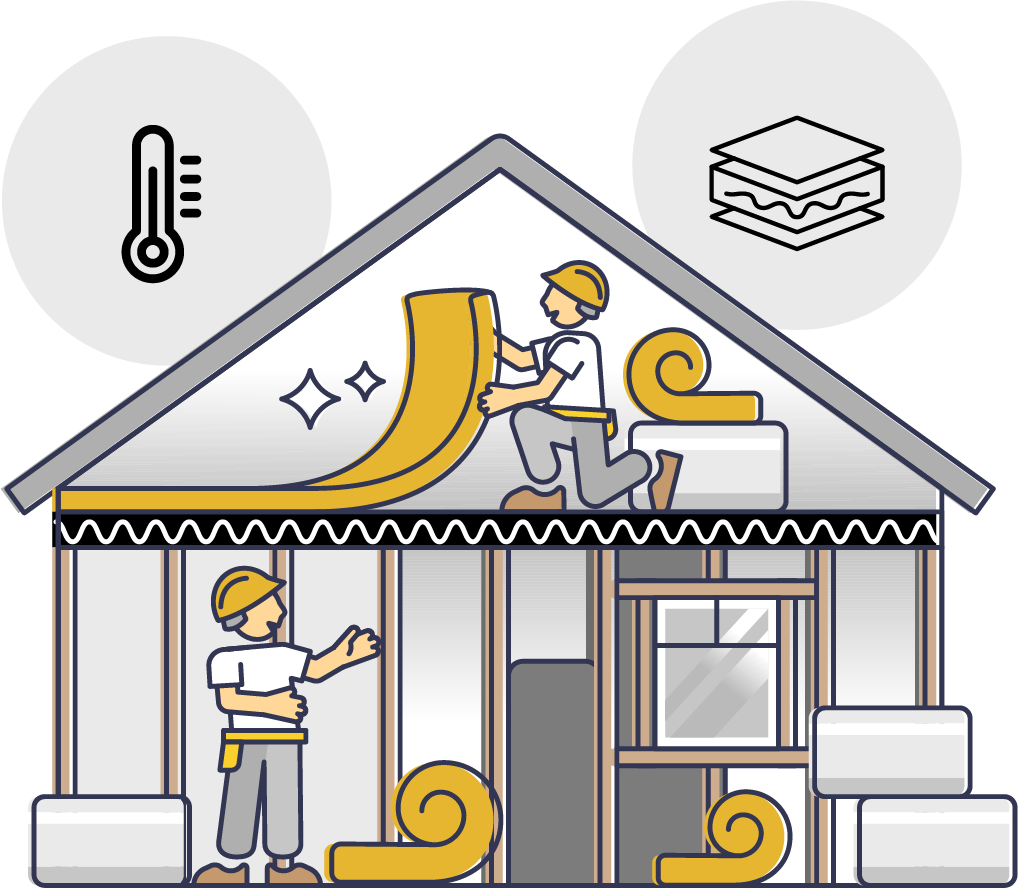
Spray foam insulation is a liquid chemical mixture that expands into foam after being sprayed into wall cavities, attics, or crawlspaces. As the foam expands, it fills small cracks and gaps that traditional insulation materials may leave behind.
The material then hardens into a dense insulating barrier that helps prevent heat transfer and air leakage.
There are two primary types used in residential construction:
- Open-cell spray foam – a lighter, softer foam that provides moderate insulation value but excellent air sealing.
- Closed-cell spray foam – a denser and more rigid foam with a higher insulation value and additional structural strength.
Closed-cell spray foam can provide an R-value of around 6 to 7 per inch, making it one of the most effective insulation materials available for residential buildings.
Because spray foam expands into small spaces, it can seal air leaks around framing, wiring, and plumbing penetrations. This ability to create a continuous air barrier is one of the biggest reasons it performs so well in cold climates.
What Is Fibreglass Insulation?
Fibreglass insulation is made from fine strands of glass fibres woven together to trap air pockets. These trapped air pockets slow down heat transfer, helping keep warm air inside during winter and outside during summer.

Fiberglass insulation is typically installed in two main forms:
Fibreglass batts – pre-cut sheets that fit between wall studs or floor joists.
Blown-in fibreglass – loose fibres installed using special equipment, commonly used for attics.
Fibreglass insulation generally provides an R-value of 2.5 to 3.8 per inch, depending on the product and density.
While fibreglass can be effective when installed correctly, it does not stop air movement on its own. If gaps exist around insulation or within wall cavities, warm air can still escape.
Despite this limitation, fibreglass remains widely used because it is affordable and suitable for many standard residential applications.
Understanding these key differences helps explain why spray foam often delivers stronger long-term energy performance.
Comparison of Upfront Costs in Canada
For many homeowners, the first factor in choosing insulation is cost. At the initial installation stage, fibreglass insulation will seem to be the more affordable option.

Fibreglass Installation Costs
Fibreglass insulation is one of the least expensive insulation materials available for residential construction.
Typical installed costs in Canada often range between:
- $0.40 to $0.70 per square foot for fibreglass batts
- Slightly higher for blown-in fibreglass installations
Because fibreglass is lightweight and relatively easy to handle, the labour costs tend to be lower than in more complex insulation systems.
In some cases, homeowners performing renovations may even install fibreglass batts themselves, further reducing project costs.
For large projects such as whole home insulation, the lower material and installation costs can make fibreglass very appealing.
Spray Foam Installation Costs
Spray foam insulation costs significantly more upfront than fiberglass.
Typical installed costs in Canada often range between:
- $3 to $5 per square foot, depending on thickness and foam type
Several factors contribute to this higher cost.
First of all, the chemical materials used to make spray foam insulation are more expensive than fibreglass. Secondly, installation requires specialized spraying equipment and trained professionals to ensure proper application.
Because the foam expands and cures rapidly, incorrect installation can cause performance issues, making professional installation essential.
Why the Price Gap Exists
The significant price difference between fibreglass and spray foam insulation comes down to several factors:
- more complex manufacturing process
- specialized installation equipment
- higher performance materials
- professional installation requirements
While spray foam costs more initially, the upfront investment can be offset by improved energy efficiency and durability over time.
To know whether that investment pays off, we need to consider how each insulation type affects energy consumption.
Energy Efficiency and Heating Savings
Due to Canada’s cold climate, energy efficiency is a primary driver of the cost of home insulation in the long term.
Even small improvements in insulation performance can produce noticeable reductions in heating bills.
Why R-Value Matters
R-value measures how effectively insulation resists heat flow. Higher numbers indicate better thermal resistance.

Typical R-values include:
- Spray foam: around R-6 to R-7 per inch
- Fiberglass: around R-2.5 to R-3.8 per inch
This means spray foam can provide significantly stronger insulation using less thickness.
In areas with limited wall cavity space—such as older homes—this higher insulation value can be particularly beneficial.
Air Sealing as a Major Advantage
Another major advantage of spray foam insulation is its ability to seal air leaks.
Many homes lose heat not only through conduction but also through air leakage around framing gaps, window edges, and utility penetrations.
Spray foam expands into these gaps, creating a continuous seal, which prevents warm air from escaping.
Fibreglass insulation does not provide this same level of air sealing. As a result, homes insulated with fibreglass may still experience drafts unless additional measures are installed.
Potential Energy Savings
Because of its superior sealing and higher R-value, spray foam insulation can significantly reduce heating and cooling energy bills.
Homeowners can get energy savings of 20% to 40% compared with other traditional insulation methods.
Over time, these reduced utility costs can offset the higher installation price of spray foam insulation.
For households facing long Canadian winters, even modest energy savings can add up to substantial long-term financial benefits.
Lifespan and Maintenance Costs
Another major factor affecting long-term insulation costs is durability.
Insulation that maintains performance for decades reduces the need for replacement or repairs, saving money over time.
Spray Foam Longevity
Spray foam insulation is extremely durable once installed.
Depending on the product and installation conditions, spray foam can last 40 to 100 years without significant loss of its performance.
Because it bonds directly to surfaces, spray foam does not sag or settle inside wall cavities over time.
Closed-cell spray foam also resists moisture infiltration, which helps reduce the risk of mould or structural damage.
Fibreglass Lifespan
Fibreglass insulation typically lasts 15 to 30 years under normal conditions.
Over time, fibreglass may:
- compress within wall cavities
- settle or shift in attics
- lose insulating performance if exposed to moisture
If fibreglass becomes wet, it needs to be replaced because moisture can significantly reduce its thermal efficiency.
Long-Term Cost Impact
Because spray foam remains stable and effective for decades, homeowners may avoid several potential expenses, including:
- insulation replacement
- moisture damage repairs
- additional insulation upgrades
Fibreglass insulation can still perform well when installed correctly, but its shorter lifespan can increase long-term maintenance costs.
Payback Period: When Does Spray Foam Become Cheaper?
Since spray foam insulation costs more initially, homeowners often ask how long it takes to recover the investment through energy savings.

Typical Payback Timeline
For many homes, spray foam insulation can pay for itself within five to seven years through lower heating and cooling costs.
The exact timeline depends on factors such as:
- local climate conditions
- home size and design
- energy prices
- installation quality
In colder Canadian regions, the payback period may be even shorter due to higher heating costs.
Long-Term Financial Impact
Over a 20 to 30-year period, the difference in energy use between fibreglass and spray foam insulation can become significant.
Reduced heating demand may save homeowners thousands of dollars in energy costs over the lifetime of the insulation.
When combined with less maintenance or replacement costs, spray foam insulation often provides a strong long-term financial return.
When Fibreglass Makes More Sense
Despite these benefits, fibreglass insulation can still be the better option under certain situations.
Fibreglass may be preferable when:
- Renovation budgets are tight
- Homeowners plan to move within a few years
- Insulation upgrades are temporary
In these cases, the lower upfront cost may outweigh long-term efficiency gains.
Choosing the Right Insulation for Your Home
Although cost is an important factor, the best insulation choice also depends on your home’s design, climate conditions, and long-term plans.

Climate Considerations
Canada’s cold winters make effective insulation essential. Homes in colder provinces may benefit more from spray foam’s airtight sealing and higher R-value.
However, fibreglass insulation can still perform effectively when combined with proper air sealing and installation techniques.
Home Construction
Some homes benefit more from spray foam insulation than others.
For example:
- older homes with air leakage problems
- houses with irregular framing or gaps
- attic spaces with complex rooflines
Spray foam can fill hard-to-reach areas where traditional insulation may leave gaps.
Fibreglass batts, however, work well in standard wall framing and open attic spaces.
Budget and Long-Term Plans
Homeowners planning to stay in their homes for many years often prioritize energy efficiency and durability.
Those with shorter time horizons or tighter budgets may focus on minimizing upfront costs.
Comparing quotes from multiple insulation contractors can help clarify which option offers the best value for your situation.
Which Insulation Type Saves More Money?
When evaluating insulation purely from a long-term financial perspective, spray foam insulation usually delivers greater overall savings.
Its higher R-value, ability to seal air leaks, and long lifespan reduce heating costs significantly over time—an especially important advantage in Canada’s cold climate.
Fibreglass insulation remains a practical and affordable solution for many homes, particularly when installation budgets are limited.

However, over several decades, the higher energy efficiency and durability of spray foam insulation have made it a more cost-effective investment.
Consider the initial installation cost against long-term energy savings to choose the option that fits your budget and goals.
By understanding how spray foam and fibreglass insulation perform over time, you can make a more informed decision that improves comfort, lowers energy bills, and protects your home for many years to come.
Get accurate prices of fibreglass and spray foam insulation tailored to your needs. Fill out the short online form on this page today and receive free quotes to compare from our partner insulation contractors.